THE SHORT ANSWER
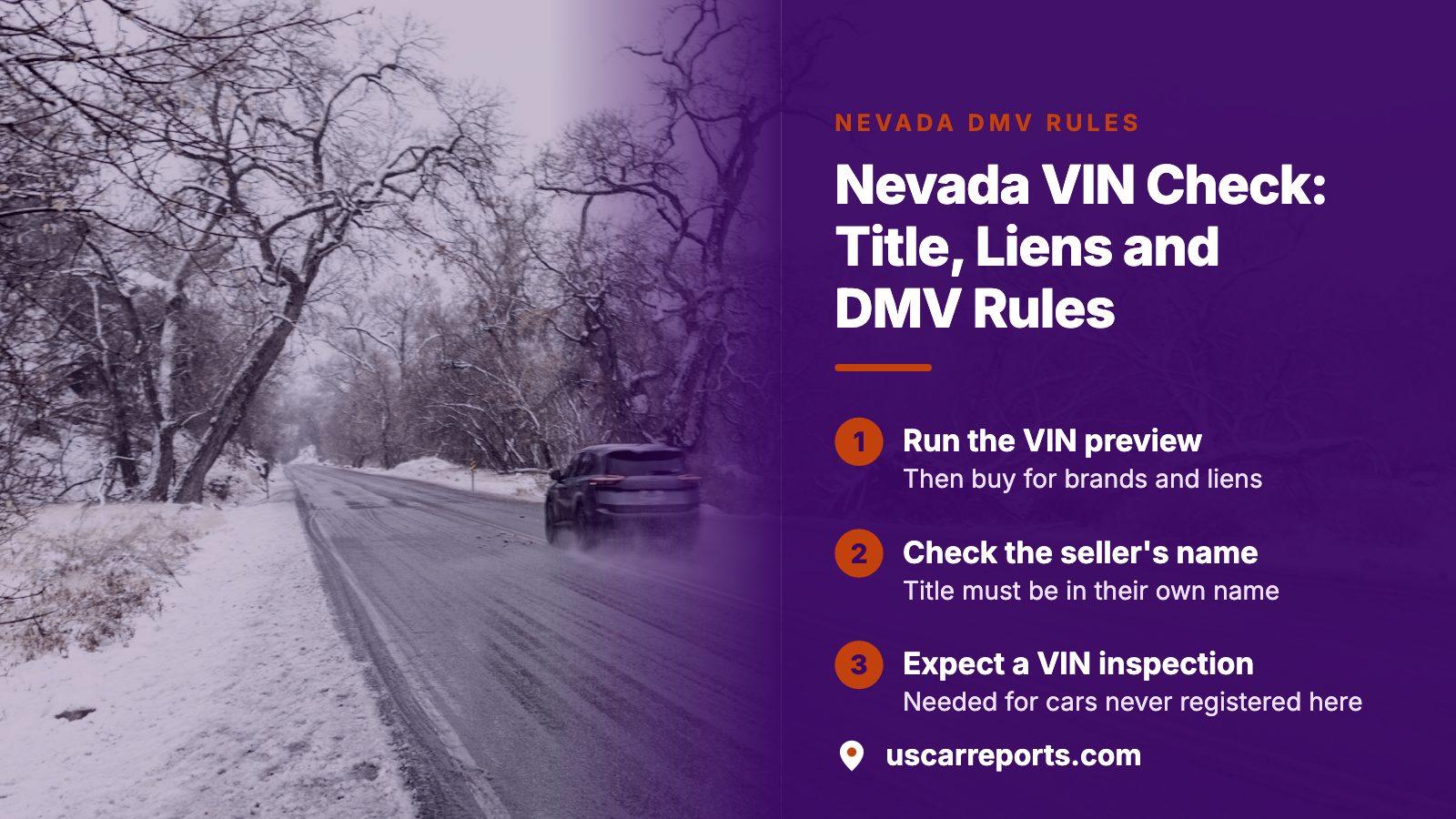
To run a Nevada VIN check, key in the 17-character VIN, view the no-charge preview, and purchase the complete report to see title brands, liens, theft entries, odometer history and sale photos from every state. Nevada adds its own steps: the seller must hold the title in their name, a car never registered here needs a DMV VIN inspection, and Clark and Washoe registrations need an emissions certificate.
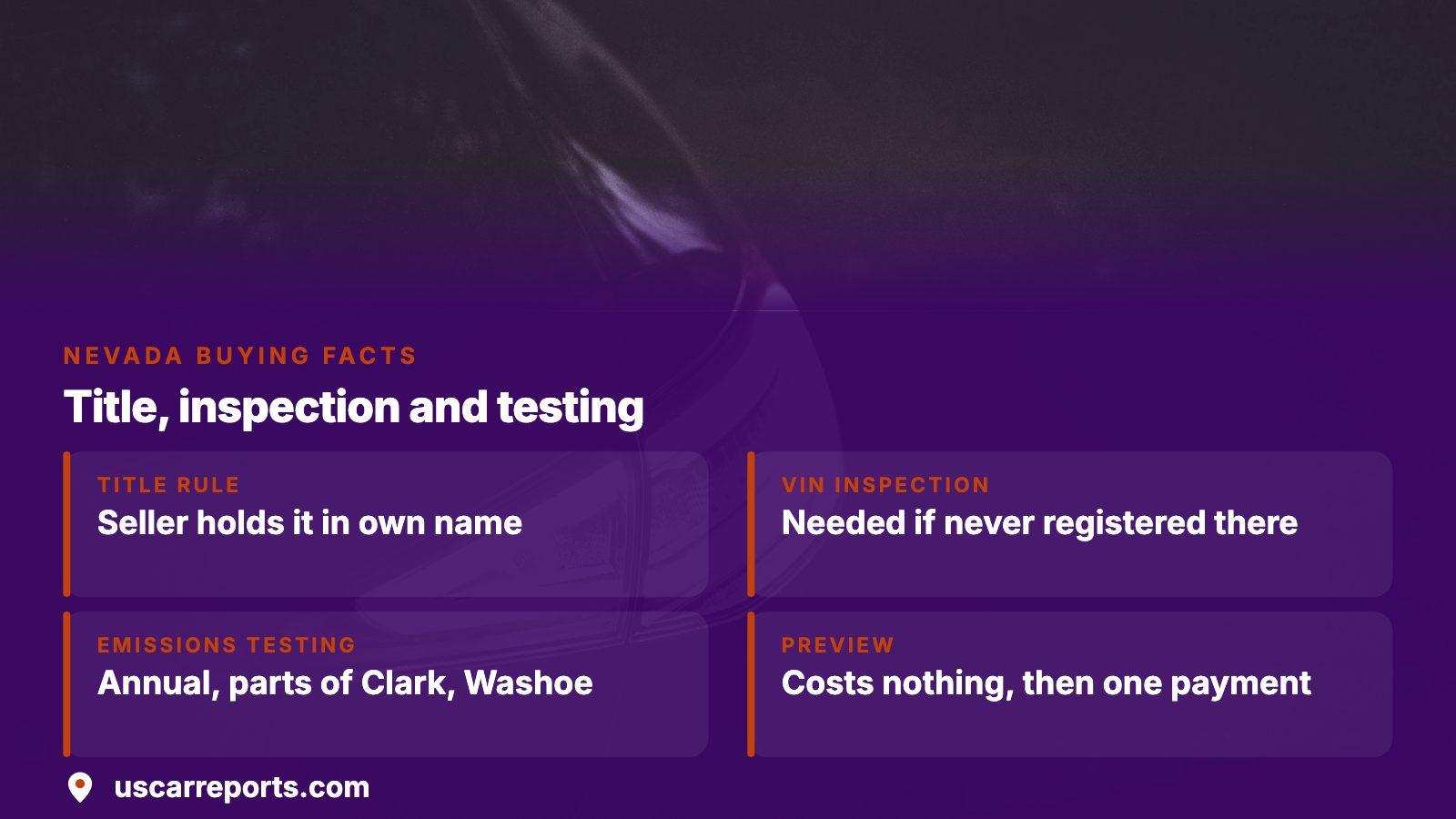
- Title rule
- Seller must hold it in their own name
- VIN inspection
- Needed for a car never registered in Nevada
- Emissions testing
- Annual, in parts of Clark and Washoe counties
- Preview
- Free, then one payment per report
What the check finds on a Nevada car before you pay
A VIN lookup in Nevada ends in a dated record of the car's life.
| Entry | What it settles |
|---|---|
| Title brands | Brands from any reporting state, including the California or Arizona title the car held earlier. |
| Odometer readings | A dated series that should only climb, held against the figure on the title. |
| Salvage and auction history, with photos | How the car looked at sale, before repairs. |
| Liens and impounds | Whether a lender still has a claim. Nevada wants it cleared before a transfer. |
| Ownership and use type | Rental or fleet service, common behind Las Vegas listings. |
| Theft records | A flag the seller's paperwork would never mention. |
Running the check: the VIN and the preview
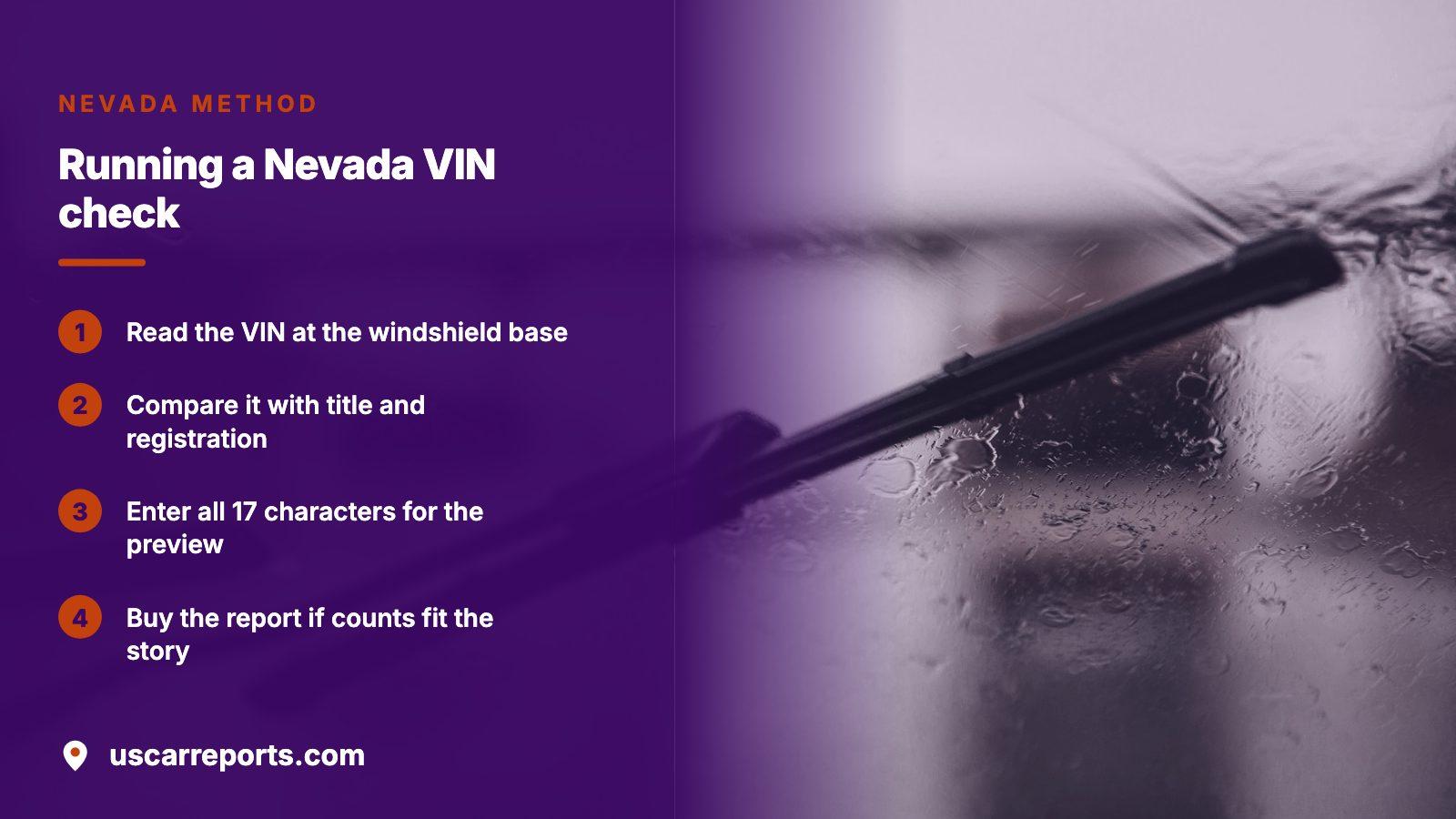
- Go to the driver's end of the dashboard and look at the base of the windshield for the number, then compare it with the label inside the driver's door.
- Compare both readings with the title and registration. One wrong character means you are researching a different vehicle.
- Enter all 17 characters and open the preview, which counts the title, auction and recall entries on file.
- If the counts fit the seller's story, buy the report and read each record against the title the seller is holding.
Nevada's buying rules, from first message to registration
All of this comes from the Nevada DMV's own pages.
| Your situation | What Nevada expects |
|---|---|
| Private seller | A title in the seller's own name. A bill of sale alone does not prove ownership. |
| Late-model vehicle | The paper title itself. A bill of sale with a duplicate-title application is refused, and the odometer figure goes on the title even if the car is marked exempt. |
| Seller still owes a lender | The lender approves the transfer, then releases its claim by issuing the title or signing a lien release. |
| Car never titled in Nevada | A VIN inspection before registration. |
| After the purchase | About a month to register, Nevada insurance in the owner's exact name, and fees based on the original sticker price, not what you paid. |
| Clark or Washoe address | A current emissions certificate, where the car is covered. |
Title paperwork: the name, the signature and the lender
The paper title decides most private sales here. The seller signs exactly as the name is printed on it, and the buyer prints their name as it appears on their driver's license. If the title joins two owners with AND, both must sign; with OR, either may.
Match the ID to the title
Put the seller's photo ID next to the title before paying. The names should match, the signature should sit in the right box and the odometer figure should be filled in.
No title? The DMV points to a bonded title when the previous owner cannot be found, or a records search. Both take time, so treat a titleless car as a project, not a bargain.
Cars arriving from California, Arizona and beyond
Plenty of used cars sold in Nevada were first registered elsewhere. One never titled here needs a VIN inspection, where an inspector confirms the number on the car matches its paperwork. A full-service DMV office does it at no charge, an authorized private business charges a small fee, and a sworn law enforcement officer can also sign off. Bring the car and its out-of-state title or registration.
The inspection verifies a number on metal. It tells you nothing about the car's years in the other state, which is what the report is for. Run it before the car crosses the border, so a brand becomes a bargaining point instead of a surprise.
Emissions testing: where it applies and how it hits a sale
In Clark County the testing area is the Las Vegas Valley with a margin around it. In Washoe County it is the Reno and Sparks area. A few Washoe communities, Incline Village among them, are exempt, and an address outside the testing areas has no requirement.
- Gasoline vehicles are mostly covered, and so are diesels rated to 14,000 pounds GVWR.
- A new vehicle skips its first three registrations and tests at the fourth. A hybrid skips five model years and tests in the sixth.
- Certificates are good for 90 days, stretching to 180 when the buyer got the car from a Nevada dealer.
- A failed test means repair and retest. A car that still fails may qualify for a one-time waiver lasting a year.
A car from outside the testing areas
A car kept in a rural county could have gone its whole life untested. Registering it in Las Vegas or Reno triggers its first test, so ask where it has been registered and have the warning light checked before agreeing a price.
Salvage, rebuilt and flood brands under Nevada law
Nevada calls a car salvage when the bill to fix it outruns a fixed fraction of its pre-damage value, or when it has sat in water above the door sill. State law requires a seller to disclose in writing any salvage, rebuilt or reconstructed brand on the car, and lying about it is illegal.
- An orange salvage title cannot pass to a private individual. Only a licensed rebuilder, wrecker or dealer may buy it, and it cannot be driven or registered until it is rebuilt and inspected.
- A rebuilt car has passed a shop inspection and a final DMV check of the VIN and repairs. Its Rebuilt brand cannot be removed or hidden.
The report adds brands from other states and sale photos of the car before repair. A listing claiming a clean history beside a report showing a salvage sale is the clearest red flag you will meet.
Red flags to read for in the results
- A salvage, rebuilt or flood brand the seller never disclosed in writing.
- Sale photos that show damage missing from the listing, particularly under fresh paint.
- An odometer series that falls, or goes flat for years.
- An open lien, to be cleared with the lender before the transfer.
- A theft or impound entry with no clear explanation.
- Rental or fleet use on a car the ad calls ordinary private ownership.
- Open recalls. The NHTSA lookup is free and lists the pending repairs.
A clean report is not an inspection
A clean report means nothing was reported. Damage that never reached an insurer, an auction or a title office leaves no trail, and sun wear on hoses and interiors appears in no record. Drive the car and put it in front of a mechanic.
Paying for the report, then finishing the deal
Looking at the preview is free of charge. A single report is a single payment, and anyone weighing several Nevada cars can pick a pack of 3, 5 or 10. No plan renews later, and the figures sit on the pricing page.
- Open the preview with the VIN from the car.
- Buy the report if the counts fit the story, then read brands, odometer and liens against the title.
- Get the emissions certificate date, or agree who pays for a fresh test.
- Settle the title: seller's name, lender release, odometer figure.
- Register inside the DMV's window, adding the VIN inspection for an out-of-state car.
Where this information comes from
- Nevada DMV: Emission Control Program — Testing areas, covered and exempt vehicles, and how long a certificate lasts.
- Nevada DMV: Registration renewal and emissions — What follows a failed test, including the one-time waiver.
- Nevada DMV: Vehicle Title and Ownership — Signature rules, lender release, bonded titles and the paper-title requirement.
- Nevada DMV: Salvage Vehicles — Written disclosure duty, orange salvage titles and the permanent Rebuilt brand.
- Nevada DMV: Frequently Asked Questions — VIN inspection routes for out-of-state cars and the private-sale registration window.
- NMVTIS: National Motor Vehicle Title Information System — The national title record, which covers brands from every state that reports.
- NHTSA: recalls — Open-recall lookup by VIN.
Sources and photos: Facts checked against the sources above in November 2026. Photos by Zoshua Colah, Thibault Valjevac and Maurice Sahl on Unsplash; diagrams by USCarReports.
Keep reading
- California VIN Check: Run the Report, Then Hold the Seller to SmogThe state most Nevada used cars arrive from, with its own title and smog rules.
- Registering a car in another state: deadlines, title and checksThe registration steps once a car crosses a state line.
- Bonded title: what it means for a buyer, state by stateThe fallback when a seller cannot produce a title.
- Sample reportSee what a finished report looks like before you run one.
Frequently asked questions
How do I run a VIN check in Nevada?
Type in the 17-character VIN, look over the no-cost preview, and pay for the whole report when you want every record. The data comes from title records, not the DMV, which enters later when you title and register the car.
Is a Nevada VIN lookup different from a VIN check?
In practice, no. People type vin check Nevada, VIN lookup Nevada and Nevada VIN lookup for the same thing. A plain decode reports only the factory build, while a history report adds brands, damage and odometer entries.
Do I need a VIN inspection to register a car I just bought?
The DMV requires one for a vehicle never registered or titled in Nevada. Take the car and its out-of-state title or registration to a full-service DMV office, an authorized business or a sworn officer.
What happens if the car fails the emissions test?
It has to be repaired and retested. If it still fails, it may qualify for a one-time waiver valid for a year. Before buying, ask the seller to pay for a fresh test or cut the price by the likely repair.
Can I buy a Nevada car that has a salvage brand?
Not while it sits on an orange salvage title, because a private individual cannot buy it or register it until it is rebuilt and inspected. A rebuilt car can be sold and registered but keeps its brand for good, so price it below an unbranded match.
Now check the car itself
The guide explains what to look for. The report shows what this VIN has on record.