THE SHORT ANSWER
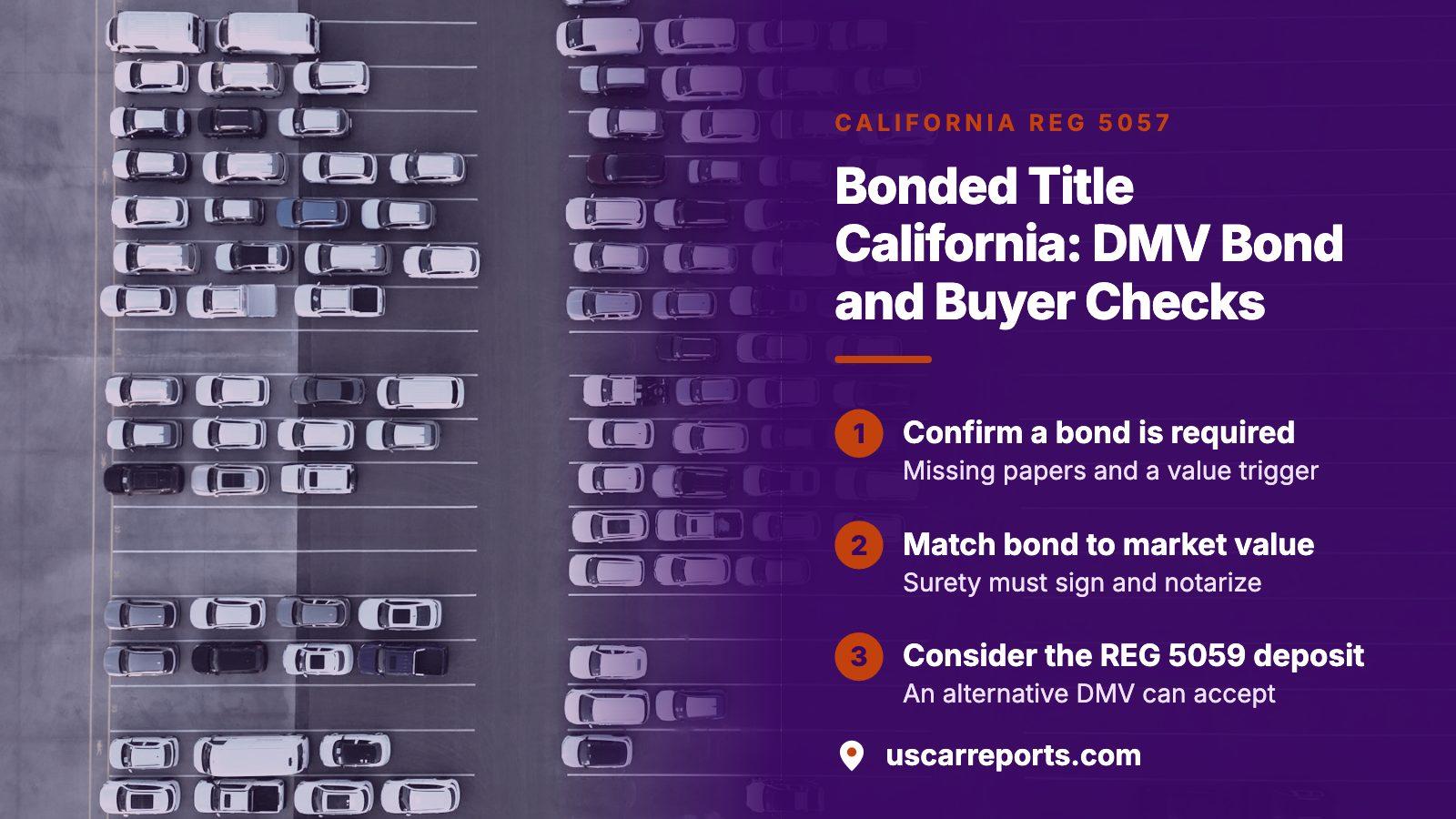
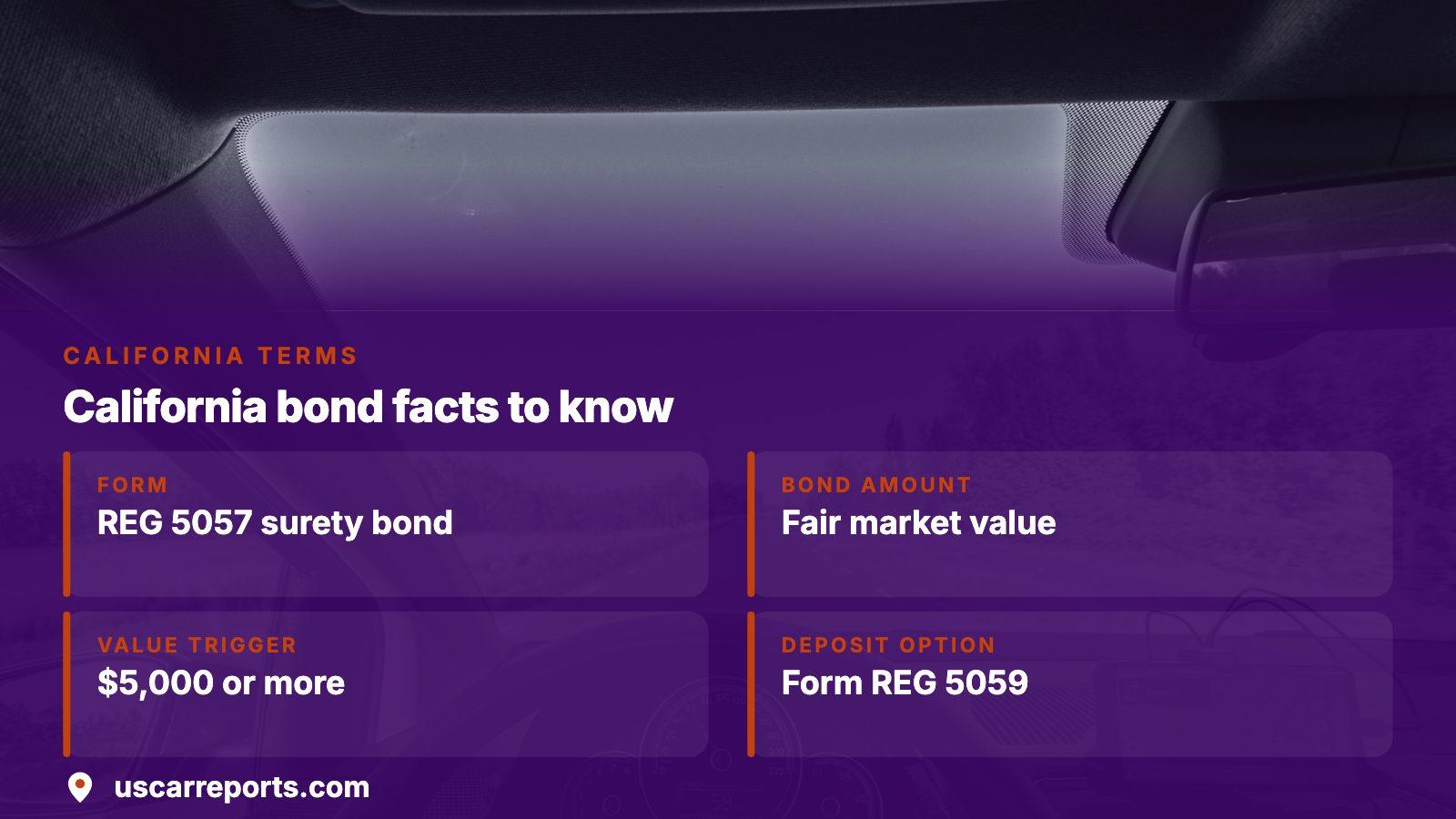
A California bonded title starts with a REG 5057 surety bond, required when ownership papers are missing and the car is worth $5,000 or more, the registration is nontransferable, or a lienholder release cannot be had. The bond equals the car's fair market value, the surety must sign and notarize it, and DMV can accept a deposit instead.
- Form
- Motor Vehicle Ownership Surety Bond, REG 5057
- Bond amount
- Fair market value of the vehicle
- Value trigger
- $5,000 or more, or one of two other conditions
- Instead of a bond
- A deposit assigned to DMV on form REG 5059
What DMV calls a bonded title
Search results use bonded title as shorthand. In the California DMV's registration procedures manual the item is a Motor Vehicle Ownership Surety Bond, and the form is REG 5057. A surety company issues it, and the applicant promises the state that no one else will show up with a better claim to the car.
The bond is a substitute for missing paper, not a title by itself. You still apply for a California title, and the bond travels with that application as the evidence the clerk would otherwise find in a signed-over certificate. A buyer who sees a seller handing over a bond and nothing else should read it as a sign that the paper trail broke somewhere.
When DMV asks for the bond
The manual sets two tests that must both be met. First, the normal evidence of ownership is unavailable. Second, at least one of the following is true.
- The vehicle is worth $5,000 or more.
- The registration is nontransferable, the goldenrod kind.
- The legal owner or lienholder will not or cannot provide a release.
A cheaper car with a clean lien history can fall outside all three, which is why two people with the same missing-title problem sometimes get different instructions. If you are unsure which side you fall on, call DMV or visit an office before paying a surety anything.
How the bond amount is worked out
California sizes the bond to the vehicle's fair market value. There is no multiplier in the manual. DMV accepts one of two proofs of that value, and the choice is yours.
| Proof of value | What it must show |
|---|---|
| Written appraisal | Prepared by a licensed dealer in California or another state, or a motor vehicle insurance representative |
| Statement of Facts, REG 256 | Low and high values from a recognized pricing guide such as Kelley Blue Book, added and halved, plus the diligent effort details |
DMV's own example makes the math plain: two values, one low and one high, are added together and the total is halved to land on the figure. What you pay the surety for the bond is a separate premium, and no premium figure appears on the DMV pages, so ask the surety for a quote.
Signature and surety rules that get applications bounced
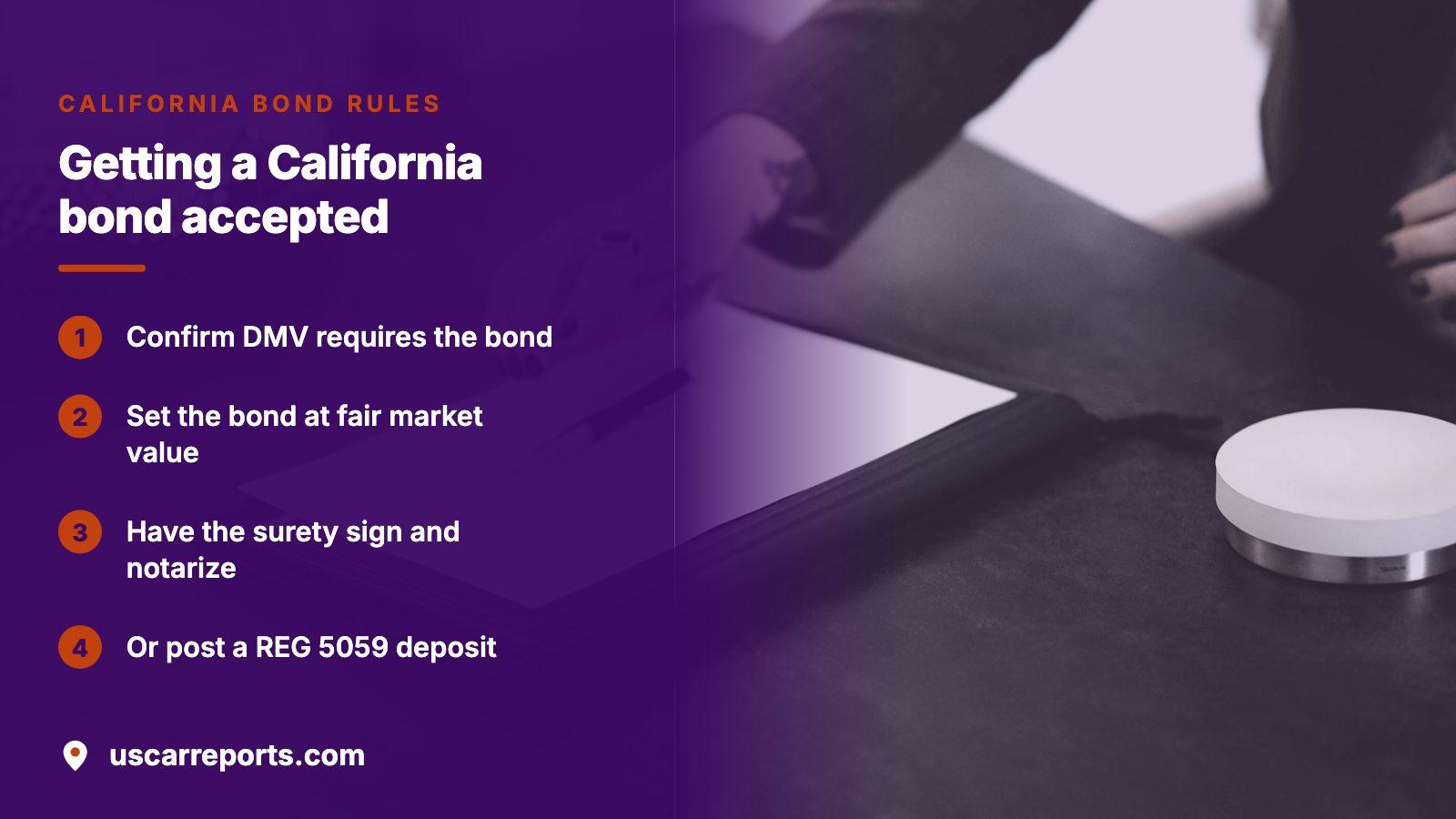
The manual is blunt about one detail. The surety has to sign the bond and have that signature notarized for your application. A form that arrives with the surety's signature and notary stamp already printed is refused.
Check the paperwork before you pay
Ask the surety to confirm it is an admitted insurer authorized in California, and look at the signature block. A bond with a preprinted signature and stamp is the one DMV says it will not take.
The manual states the admitted-insurer requirement for the vessel case, so treat it as the safe standard for cars too and confirm it with DMV.
Posting a deposit instead of buying a bond
DMV accepts several alternatives to a surety bond, each recorded on a Title Deposit Agreement and Assignment, REG 5059. They suit applicants who would rather tie up their own money than pay a premium.
- Cash deposit, which DMV keeps in an interest-bearing trust account. A personal check does not count until it clears.
- A bearer bond or note issued by the federal government or California.
- A bank certificate of deposit made payable to the state, held for three years or until DMV surrenders it.
- An assigned savings account, investment certificate or share account, within the federally insured amount.
A savings account has to match the bond amount or the car's retail value, and the passbook goes with it. Cash and accounts stay locked up while DMV holds them, so weigh that against a one-time premium.
The goldenrod registration and out-of-state cars
Many bond cases begin with a registration card marked Nontransferable, no California title issued. DMV says a replacement-title form, REG 227, cannot fix that. The title has to come from the state that last issued one.
If that state cannot issue a title, you bring proof that it cannot, and DMV says a motor vehicle bond may then be required. When you are not the owner named on the card, the conversion also calls for an application on REG 343, the last title signed by the owner, bills of sale for every sale in the chain, and a lien-satisfied statement where the lienholder did not sign.
If the title is California's and simply lost
A lost, stolen or damaged California title usually needs no bond. The owner files form REG 227 at a DMV office or sends it by post. Its fifth section needs a notary only if the registration lists a legal owner or lienholder.
If the lender behind the lien closed or merged, DMV keeps a list to help trace the successor. Ownership or lienholder changes are reportable to DMV within 10 days, and new titles usually arrive by mail in 15 to 30 days.
What a buyer should check before accepting a bonded car
A bond answers one question: who owns the car. It says nothing about liens, a salvage past, theft or a rolled-back odometer. California brands titles for things like salvage, lemon law buyback, taxi and police use, and a car arriving through a bond can carry any of them.
Run the VIN first. Start with the preview, which costs nothing. The full report, a one-time purchase, shows title brands, liens, theft and damage records before you pay a surety or the seller. Federal NMVTIS data, described at vehiclehistory.gov, exists to keep stolen cars from being resold, so it is a sound reason to look at title history.
Ask the seller why the title is missing, request every bill of sale they hold, and walk away if the explanations shift.
Cars sold through a lien sale
Some paperless cars come from a lien sale, where a shop or tow yard that was never paid sells the vehicle. DMV allows this only when the lienholder had physical possession, and it splits its instructions at a value of $4,000. Salvage pools and charities cannot use the process to obtain title.
If a seller says the car came from a tow yard, ask for the lien sale paperwork. A VIN check shows whether the record matches the story and whether a lien still sits on the car.
Where this information comes from
- California DMV: Motor Vehicle Ownership Surety Bond (23.020) — Source for when the bond applies, how value is set and the signature rule.
- California DMV: Bond alternatives (23.025) — Lists the deposit and account options that can replace a bond.
- California DMV: Title transfers and changes — Replacement title steps and the nontransferable registration answer.
- California DMV: Converting a nontransferable registration — Documents needed and where a bond may come in.
- California DMV: Lien sales for vehicles — Who may hold a lien sale and the value split.
- NMVTIS: vehiclehistory.gov — Federal purpose of national title records.
Sources and photos: Facts checked against the sources above in November 2026. Photos by Iain, Annika Wischnewsky and Sander Jeurissen on Unsplash; diagrams by USCarReports.
Keep reading
- California VIN Check: Run the Report, Then Hold the Seller to SmogRun the VIN and see what California buyers should look for.
- California title check by VIN: brands, salvage rules and the 10-day clockHow to read a California title and its brands.
- Bonded title: what it means for a buyer, state by stateHow bonded titles differ from state to state.
- Salvage title registration in California: revived salvage, step by stepThe next step if the check turns up a salvage brand.
Frequently asked questions
What is a bonded title in California?
DMV does not use that name. It asks for a Motor Vehicle Ownership Surety Bond, REG 5057, when normal ownership evidence is missing. The bond backs your title application, so anyone with a better claim to the car can be paid from it.
Is the California bond amount one and a half times the value?
Not according to the DMV manual. It says the bond is for the car's fair market value, shown by a dealer or insurance appraisal or a REG 256 using pricing guide values. Confirm the exact figure with DMV before buying.
Can I skip the bond if the car is cheap?
Possibly. The $5,000 value test is one of three triggers, and the others are a nontransferable registration or a lienholder release that cannot be obtained. A car below that value with none of the others may not need one. DMV decides in your case.
Do I need a bond for a lost California title?
Normally not. A lost, stolen or damaged California title is replaced with the REG 227 application, in person or by mail. The bond route is for cases where ownership evidence cannot be produced at all.
Does a bond tell me the car is safe to buy?
No. It addresses ownership claims only. Liens, salvage or flood history, theft and odometer problems need a separate VIN check, which starts with a free preview before you decide on a report.
Now check the car itself
The guide explains what to look for. The report shows what this VIN has on record.