THE SHORT ANSWER
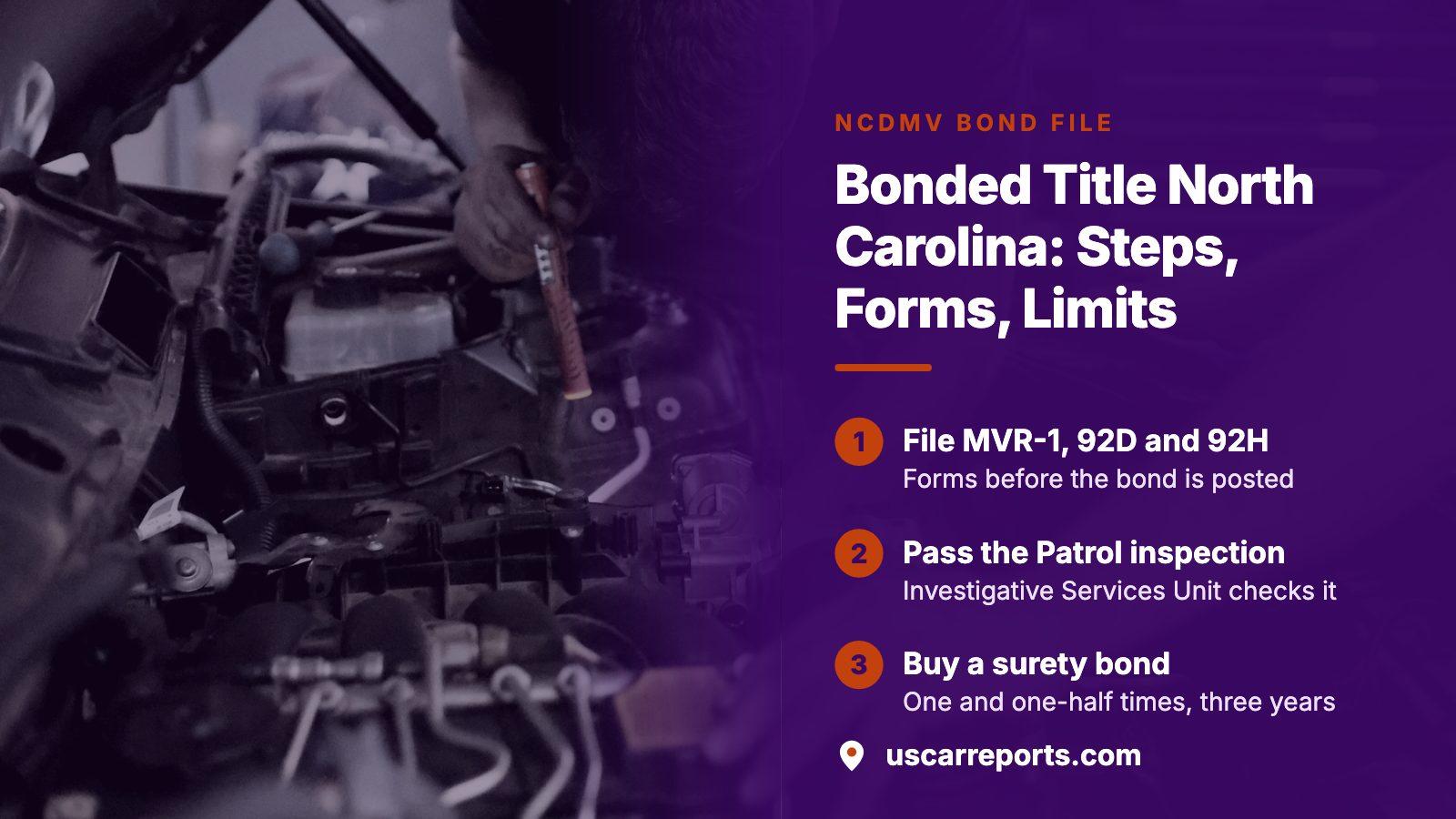
To get a bonded title in North Carolina you file the NCDMV forms (MVR-92H, MVR-1 and the bond on MVR-92D), have the State Highway Patrol inspect the car, and buy a bond from a surety licensed in the state. The bond equals one and one-half times the car's scheduled value and sits on file for three years. NCDMV can still reject it.
- Bond size
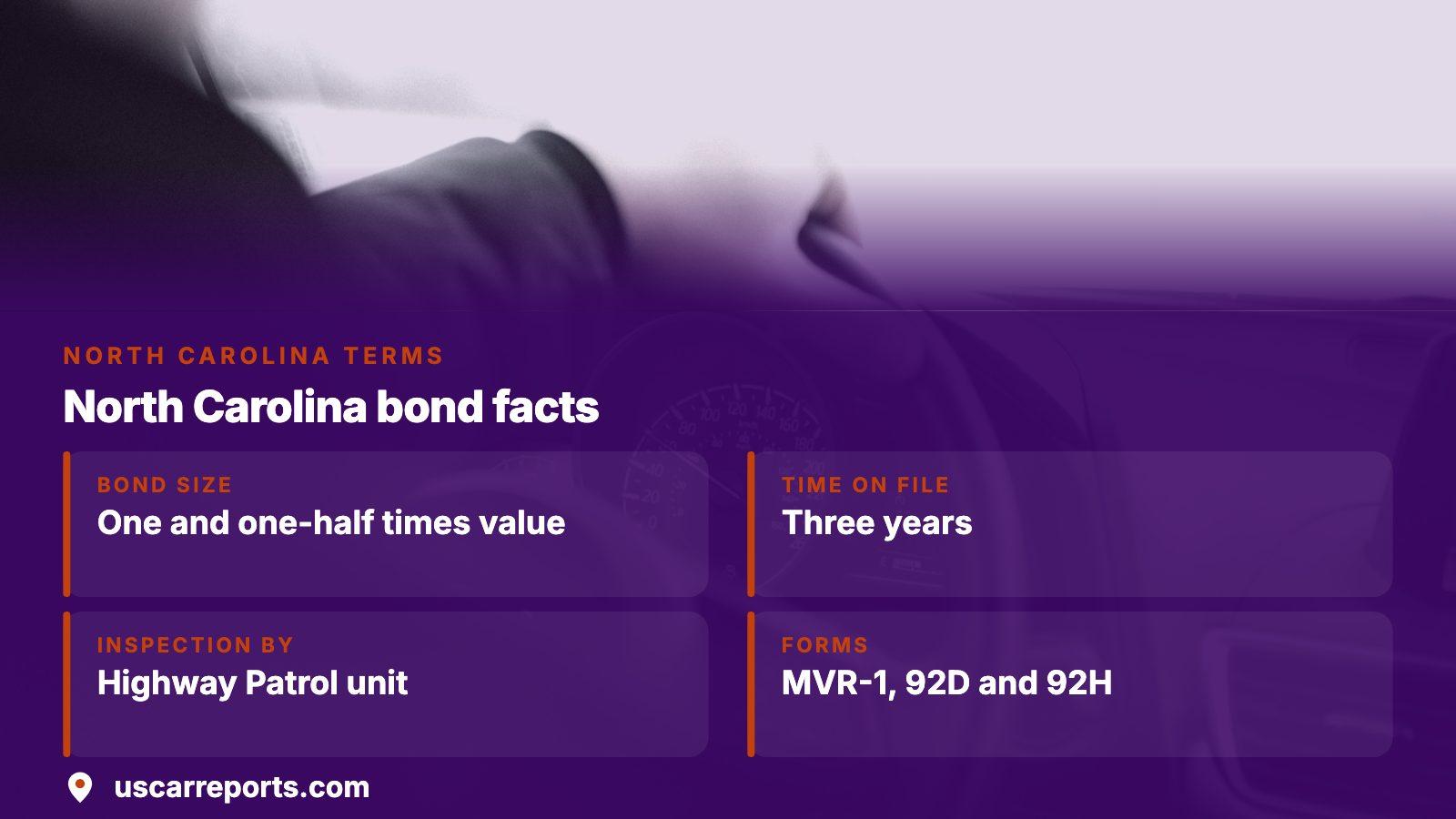
- One and one-half times value, $100 minimum
- Time on file
- Three years
- Inspection by
- State Highway Patrol Investigative Services Unit
- Application forms
- MVR-1, MVR-92D and MVR-92H
What a bond does when the seller never gave you a title
Say you paid cash for a pickup, the seller handed over keys and a handwritten receipt, and the title never showed up. North Carolina will not title a car on a receipt alone. What it offers instead is a bond: an indemnity bond written by an insurance company, or a cash bond, that protects the state and any later claimant if someone proves they owned the car first.
The bond is not coverage for you. If a real owner appears and collects, the surety pays and then expects you to cover it. That is why the state wants the paperwork, the inspection and the appraisal finished before any money goes to a surety.
The state can still say no
Form MVR-92A warns that the Division may turn down a bond and withhold the title, citing G.S. 20-76. Filing is a request, not an entitlement.
Cars North Carolina will not take a bond for
Read this list before you pay a surety anything, because several of these situations are common among cars bought cheap and unsigned. NCDMV's instruction sheet names the cases where a bond is not acceptable:
- An abandoned vehicle, or one held under a mechanic's or storage lien.
- A lien the lienholder cannot cancel. The car must be clear of every lien, and a new lien can be added only after the new title issues.
- Any vehicle tied up in pending litigation, such as a death, civil suit, divorce or repossession.
- A vehicle not kept in North Carolina, or a non-resident's vehicle that is not registered here.
- A car already branded as parts-only, non-rebuildable or junked.
- A car an insurer declared a total loss that was never titled in the insurer's name, or was sold without a title.
If your car lands on that list, a bond is the wrong tool and a call to NCDMV is the right one.
The forms, in plain terms
NCDMV's special cases page lists the documents. Each has a job, and a mismatch between them is the usual reason an application stalls.
| Form | What it does |
|---|---|
| MVR-92A | The requirements sheet. Read it first; it sets the sequence. |
| MVR-92H | Affidavit of Facts, notarized, with any proof of ownership attached. |
| LT-270 | The inspector's report from the Highway Patrol. |
| MVR-92D | The indemnity bond itself, signed and witnessed. |
| MVR-1 | Title application, notarized, with every lien declared. |
An odometer reading is also required when the vehicle is under 10 years old.
Why the order of steps decides how much you spend
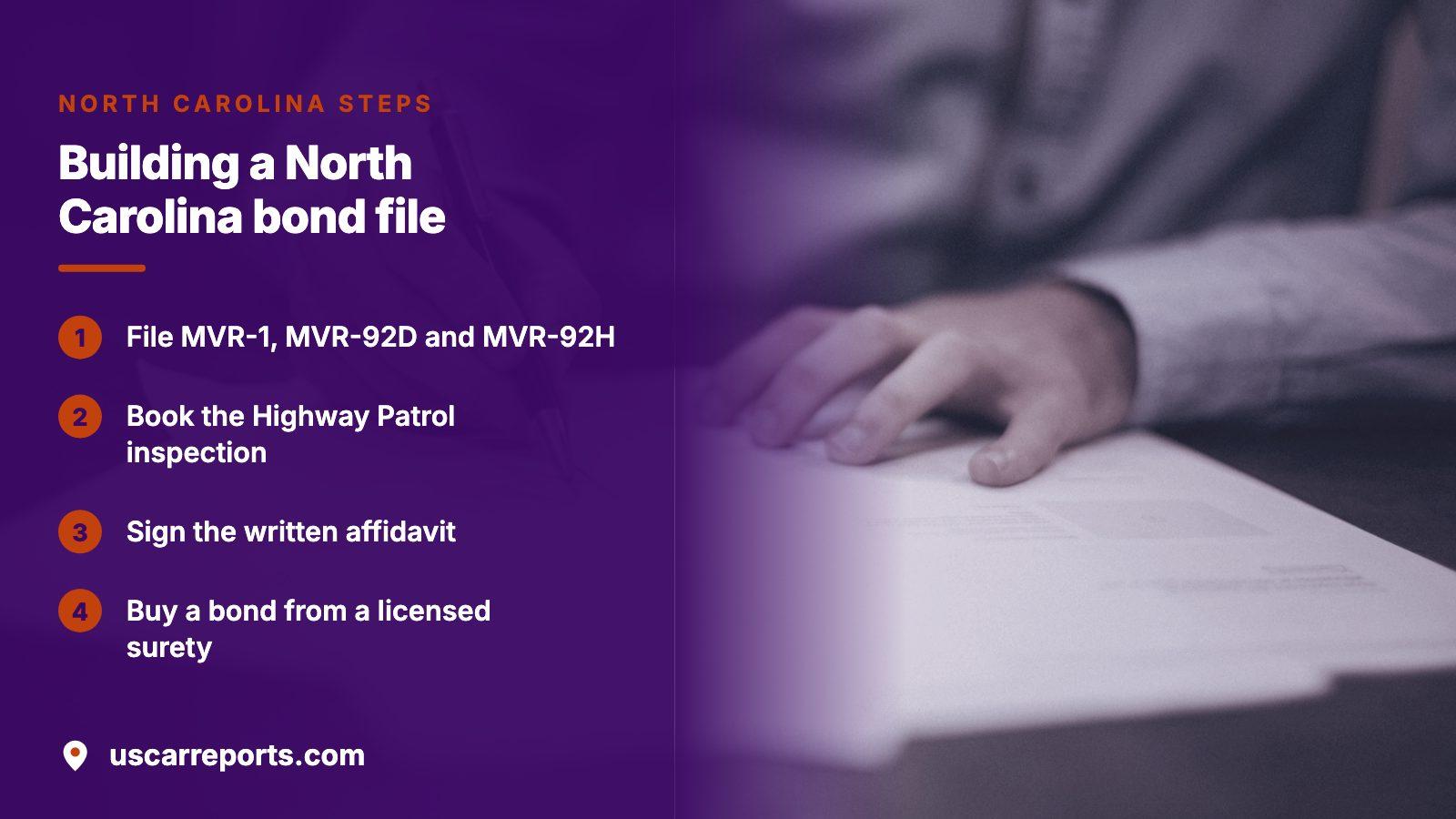
MVR-92A carries a bold warning not to buy the bond before finishing the first three steps. The reason is simple: an inspection or affidavit problem can end the application, and a bond bought early is money spent on a file that never moves.
- Complete and notarize the affidavit, attaching whatever shows you own the car.
- Have a Highway Patrol inspector examine the vehicle and produce the inspection report.
- Get the value from NCDMV's Value Schedule, or two dealer appraisals if the car is not listed.
- Buy the indemnity bond from a licensed surety.
- File the notarized title application with the bond and report.
- Pay the title fee and highway use tax.
How the bond amount is set
The figure comes from the car's value, not from what you paid. NCDMV points you to its current Value Schedule, which you can get at a license plate agency or by calling 919-715-7000. The bond must be one and one-half times that value, and never under $100.
Mobile homes and vehicles missing from the schedule work differently. You bring two appraisals from North Carolina dealers, each on the dealer's letterhead, and the bond is sized from the higher one. The finished bond stays on file for three years, and only an insurer licensed to write surety bonds in the state can issue it.
We did not find a surety premium on any NCDMV page, so we print none. Ask a licensed agent for a quote against your car's scheduled value.
The Highway Patrol inspection and the car that will not run
An inspector from the State Highway Patrol's Investigative Services Unit looks the vehicle over, and you hand in the title application and affidavit at that visit. This is where a questionable car gets caught: the inspector is checking the vehicle against what you claim.
If the car does not run, NCDMV issues an Inoperable Title and no registration follows until a License and Theft Bureau inspector rules it operable. Passing an emissions inspection at an authorized station comes before a plate is issued.
Your name, the VIN, the model year, the make and the body style on the title application have to match the bond and the inspection report letter for letter. Two spellings of one name are enough to send paperwork back.
What the affidavit makes you put in writing
MVR-92H asks nine questions, and none of them is a formality. You give the seller's full name, address and phone number, the date you took the car, and where the VIN plate sits on the vehicle. You also say whether the car was in a wreck and list any big parts swapped out.
The two that trip people are the last ones: why the seller did not give you a properly assigned title, and what you did to reach the seller or a previous owner. A reply of "he stopped answering" with no dates or messages reads thin. Omissions can delay or deny the title, per the instruction sheet.
Keep a trail
Save texts, call logs and any bill of sale before you file. The form lists examples of acceptable proof: a title, bill of sale, sales contract, invoice or out-of-state registration.
Run a VIN check before you build the file
A bond solves a missing signature. It does not solve a stolen car, a lien nobody told you about or a brand from another state, and NCDMV's own list shows how many of those block the bond outright. The cheapest time to find out is before you notarize anything.
On USCarReports you can enter the VIN and see a free preview, then decide whether to buy a report for the car. A title brand, a lien, a theft record or a salvage auction entry would each change your plan, and an odometer reading helps when the form asks for one. The page at /pricing explains how purchases work.
Federal records back this up in general terms: NMVTIS was built to shield buyers from title fraud and unsafe cars, and to stop thieves from reselling what they took.
What we could not confirm
The title fee table on NCDMV's fee page did not load as text for us, so we quote no title fee. The state's statute pages refused our request, so we cite only the section numbers printed on NCDMV's own form. We also found no first-hand buyer account we could verify, so none is quoted.
Before you file, confirm the current fee and the current Value Schedule with NCDMV at 919-715-7000. If a car has sat abandoned on your property, the Investigative Services Unit at 919-757-0753 handles that route, which is separate from a bond.
Where this information comes from
- NCDMV: Vehicle Title Special Cases — Bonded vehicle steps, documents, bond size, term and exclusions.
- NCDMV: MVR-92A bond requirements — Step order, matching rules and the refusal warning.
- NCDMV: MVR-92H Affidavit of Facts — The nine questions the applicant answers under oath.
- NCDMV: Title and registration fees — Where current title fees are published.
- VehicleHistory.gov: NMVTIS — Federal purpose of the national title information system.
Sources and photos: Facts checked against the sources above in November 2026. Photos by Mustafa Sheikhmouss, Scott Graham and Miles Loewen on Unsplash; diagrams by USCarReports.
Keep reading
- Bonded title: what it means for a buyer, state by stateHow bonded titles work across states.
- North Carolina title check by VIN: brands, the 75% line and the damage formHow North Carolina brands salvage and flood cars.
- North Carolina VIN Check: Run the Report Before You PayChecking a VIN before buying in North Carolina.
- Abandoned vehicle title: what each state issues, and to whomThe separate route for a car left on your property.
Frequently asked questions
How much is a bonded title in North Carolina?
Expect a bond of one and one-half times the car's scheduled value from NCDMV, never below $100. What a surety charges for that bond is not on NCDMV's pages, so get a quote. Title fee and highway use tax are separate.
How long does the bond stay on file?
Three years, according to NCDMV's instruction sheet. It takes effect when the new title issues and stays in force until the Division surrenders it.
Can I get a bonded title for an abandoned car?
No. NCDMV lists abandoned vehicles among the cases where a bond is not acceptable. The state describes a separate process that starts with law enforcement and, after 30 days unclaimed, a sale.
Do I need an inspection for a bonded title?
Yes. A State Highway Patrol Investigative Services Unit inspector must examine the vehicle, and you submit the title application and affidavit at that time. An emissions inspection is also required before a plate is issued.
Should I check the VIN before applying?
Yes, and before you buy the bond. A lien, theft record, junk brand or insurer total loss can make a bond unavailable. A VIN check preview costs nothing, and it shows what the report would add.
Now check the car itself
The guide explains what to look for. The report shows what this VIN has on record.