THE SHORT ANSWER
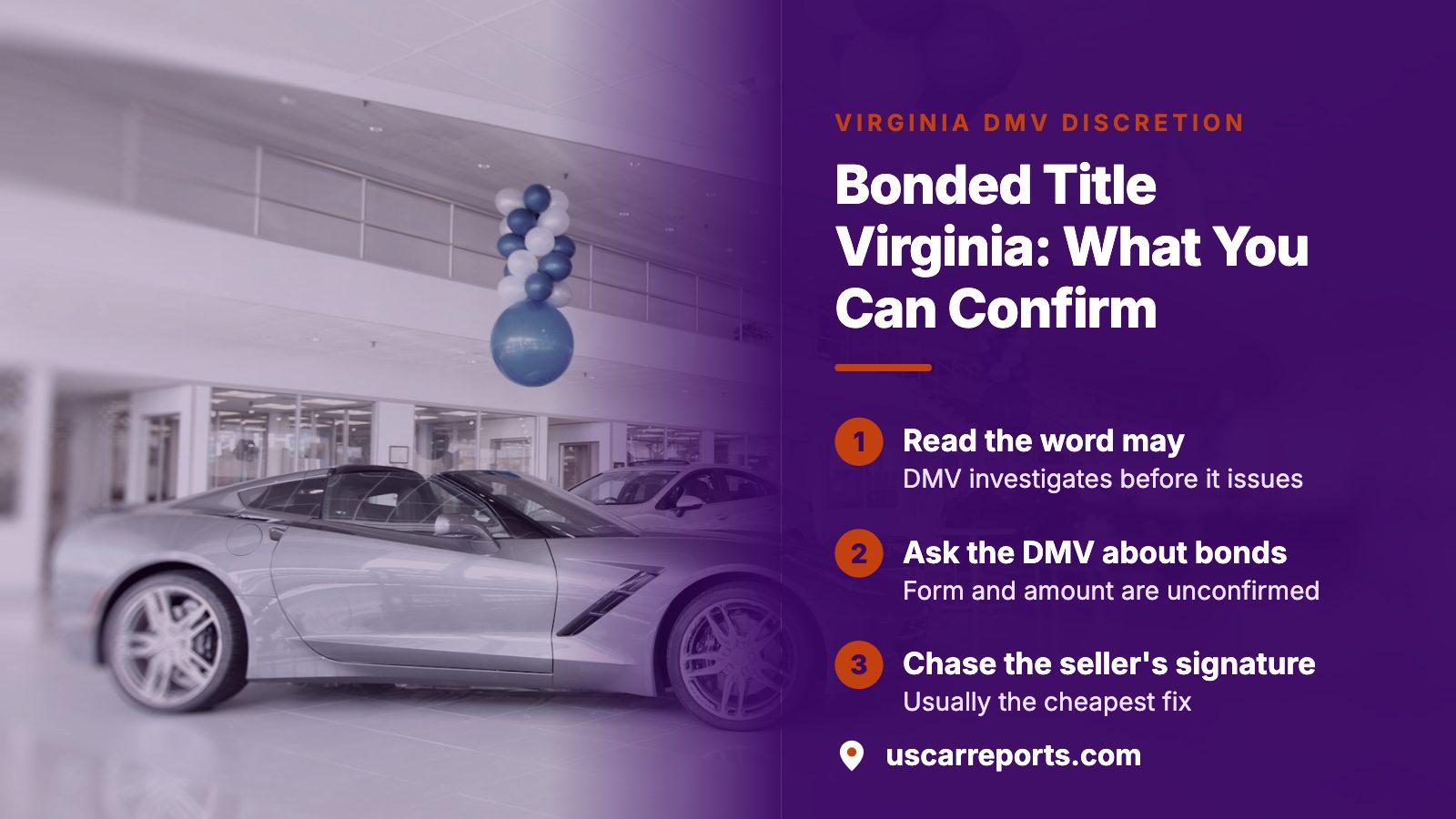
The Virginia Code lets the DMV take a title application when the certificate is lost, unlawfully withheld or otherwise unavailable. The DMV may investigate, may ask for affidavits, and issues a title only if it is satisfied you are entitled to it. We could not read the DMV's own pages, so we cannot confirm a bond form, a bond amount or a surety step. Ask the DMV before you pay for anything.
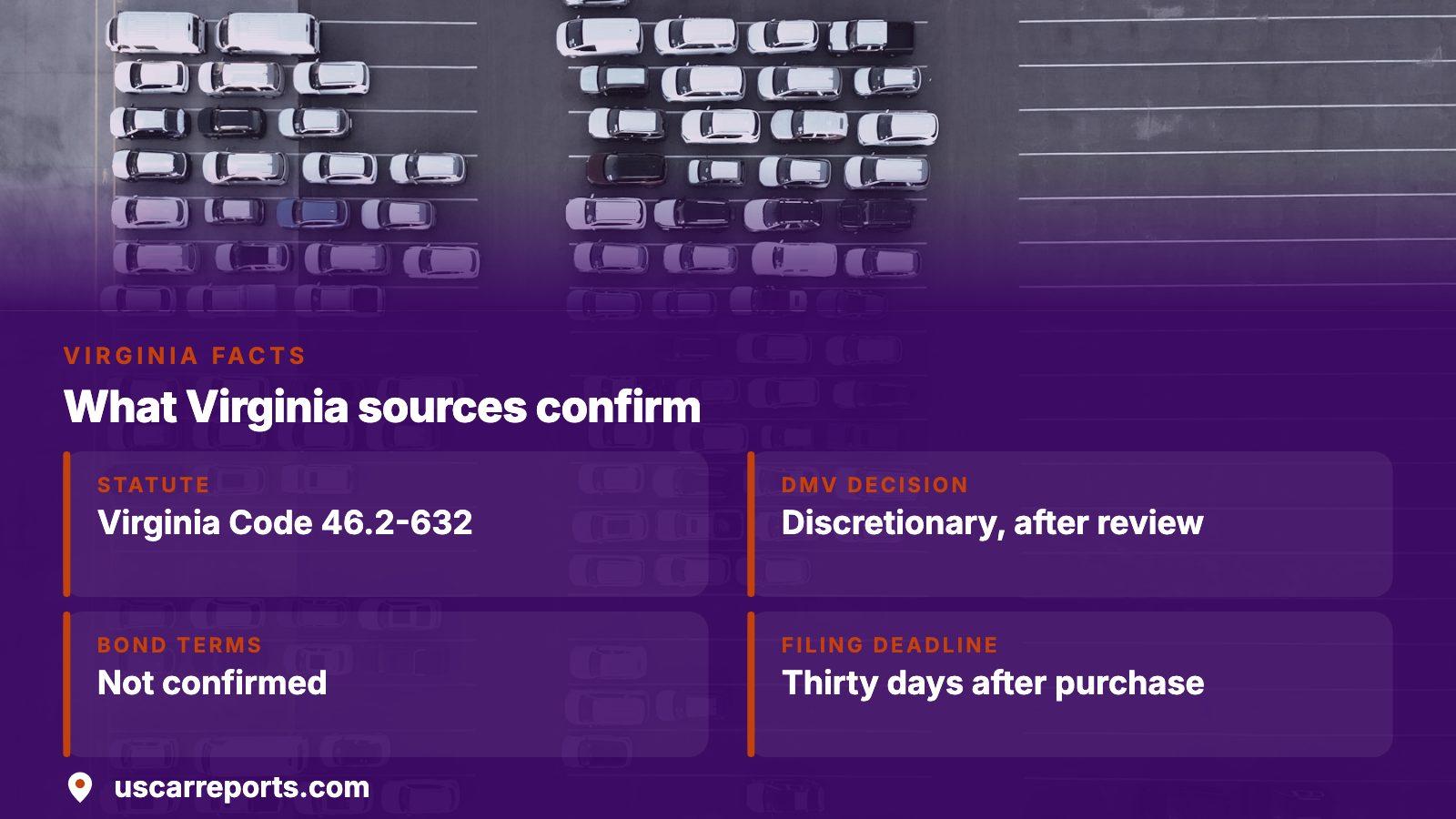
- Governing statute
- Virginia Code 46.2-632
- DMV decision
- Discretionary, after an investigation
- Bond terms
- Not confirmed from a DMV page
- Filing deadline after a purchase
- Thirty days
What a Virginia source actually says about a missing title
Our research for this page began at the DMV and stopped there: its pages refused every automated request, so no DMV form, fee table or bond instruction was read. What did open was the Virginia Code, and one section speaks directly to your situation.
Section 46.2-632 covers an applicant who cannot show a title because it was lost, is being unlawfully held by whoever has it, or is otherwise not available. In that case the DMV may take the application, look into the circumstances, and ask for affidavits or other information. Once satisfied that the title belongs to you, the DMV has the power to register the car and print a fresh certificate.
What is missing from the statute
The text of that section never uses the word bond. Elsewhere in the same chapter, bonds appear only for attachments, mechanic's liens and insurance. If another site quotes you a Virginia bond multiple, a form number or a bond term, ask where it read that, because we could not find it in an official source.
The word that matters is may
Read the statute twice and the verb stands out. The DMV may receive the application, may require affidavits, and may issue a title once satisfied. Nothing promises a title to an applicant who files paperwork and pays a fee.
For a buyer that changes the order of operations. The sequence is not buy a bond, then collect a title. It is persuade the DMV you own the car, using whatever documents it asks for, and only then pay for anything that it says it needs. Any third party selling a guaranteed Virginia title should be treated with caution.
- A bill of sale with both names, the date and the odometer reading
- The seller's contact details and any ID you can lawfully keep on file
- Messages or receipts showing you paid and when
- The VIN as printed on the car, matched to your paperwork
What we could not confirm
A page about a bonded title should say plainly where the evidence ends. Four things stayed unconfirmed because they would have to come from the DMV itself.
| Question | Status |
|---|---|
| Does the DMV issue a title backed by a surety bond? | Not confirmed. The statute is silent. |
| Is there a bond form, and what does it cost? | Not read. No DMV page opened. |
| Is there a waiting period before the title issues? | Not confirmed. |
| Current title fee | Statute says ten dollars for an original title; the DMV fee page was unreadable, so confirm it. |
The honest advice is to call or visit a DMV customer service center, describe the sale in two sentences, and ask what that office wants to see. Write down the name of the person and the date.
Why the seller's signature is the cheapest fix
Virginia obliges a seller to complete the transfer section of the certificate and give it to the buyer at the handover. A seller who willfully fails to endorse it correctly commits a Class 3 misdemeanor. That gives you bargaining power the day you notice the problem.
The buyer then writes a name and address in ink on the certificate and, within thirty days, mails or brings it to the DMV along with the application to register and title the car. If the title is merely held by a lender or a relative, a phone call and a signature will usually be faster than any bond or court process. Keep every message you send asking for it.
Do not pay in full without the title
If a seller says the title is coming, split the payment or hold part of it until a correctly endorsed certificate is in your hands.
Other statutory routes that may fit your case
A missing title is not always a bond question. Virginia sets out separate paths depending on how the car reached you, and one of them may apply.
- Transfer by operation of law: heirs, a surviving joint owner, a bankruptcy or execution sale, a repossession or a court order bring their own documents, listed in section 46.2-633.
- Abandoned vehicles: anyone holding one must start an owner and lienholder search through the DMV, for a $40 fee. The DMV notifies the owner by certified mail, with 15 days to reclaim. A locality's auction buyer may apply for a title using the sales receipt, the Vehicle Removal Certificate and the search receipt.
- Insurer acquisitions: an insurance company that took a non-salvage car through a claim can apply with an affidavit, and the Commissioner may add a $25 processing fee.
Our abandoned vehicle page walks through the property-owner version of that second route.
Run the title paperwork check before you spend on any fix
A missing title has two common explanations: a seller who is slow, or a seller who cannot legally sell. The first is an inconvenience. The second is why you want facts before you pay a bond premium or a filing fee.
Running the VIN through our report lets you see whether a lien is still recorded, whether a theft record exists, and whether another state has branded the title as salvage or flood. The preview is free, and the full report is one payment, priced on our pricing page. If a lien shows up, you now know why the seller never produced the title.
A lien explains many missing titles
A lender often holds the certificate until the loan is paid. A seller without a title may still owe money on the car, and the payoff is a different problem than a lost piece of paper.
Red flags that should stop the sale
Some stories sound ordinary and are not. Walk away, or at least pause, when you see any of the following.
- The seller's name does not match the name on the registration card.
- The VIN on the dashboard, door jamb and paperwork differ.
- The seller refuses to meet at a DMV office or to sign a notarized statement.
- The report shows an open lien, a theft entry or a brand the seller never mentioned.
- The price is far below similar cars with no explanation.
Each item is a reason to ask the DMV what it would require, since the DMV is the one deciding whether you are entitled to the title.
A short plan if you already bought the car
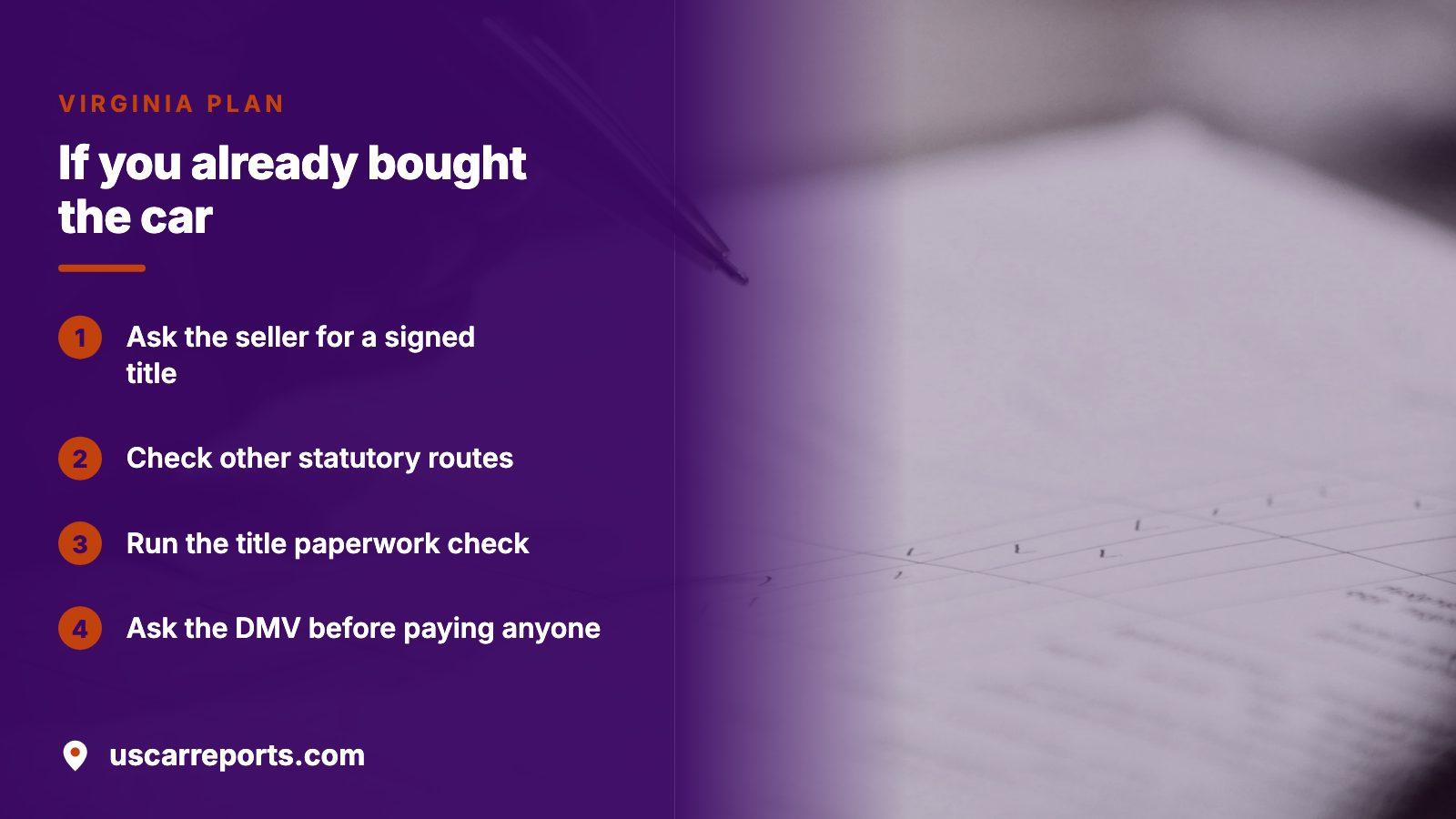
- Photograph the VIN, the odometer and the signed bill of sale today.
- Ask the seller in writing for the endorsed title and keep the reply.
- Run a VIN report to look for liens, theft and brands.
- Contact a DMV customer service center, describe the sale, and ask what it requires under the lost or unavailable title rules.
- Do not buy a bond or pay a title service until the DMV confirms a bond is part of your process.
Move quickly: the thirty-day filing clock runs from the purchase, and a delay makes any later explanation harder to document.
Where this information comes from
- Virginia Code 46.2-632: transfer when title lost — The discretionary route for lost, withheld or unavailable titles.
- Virginia Code 46.2-628: how title is transferred — Seller endorsement duty and the misdemeanor penalty.
- Virginia Code 46.2-1202: owner and lienholder search — Owner search, fee and notice period.
- Virginia Code 46.2-1203: locality auction buyers — Documents an auction buyer uses to apply for a title.
- VehicleHistory.gov: NMVTIS — Federal purpose of the national title information system.
Sources and photos: Facts checked against the sources above in November 2026. Photos by Richard R, Masjid MABA and Iain on Unsplash; diagrams by USCarReports.
Keep reading
- Bonded title: what it means for a buyer, state by stateHow bonded titles work in the states that issue them.
- Virginia title check by VIN: certificates, the late model rule and 30 daysHow Virginia brands salvage and rebuilt cars.
- Virginia VIN check: salvage rules, title steps and inspectionChecking a VIN before buying in Virginia.
- Abandoned vehicle title: what each state issues, and to whomThe separate route for a car left on your property.
Frequently asked questions
Does Virginia issue bonded titles?
We could not confirm it. The DMV's pages refused our requests, and the statute covering missing titles never mentions a bond. It lets the DMV investigate and issue a title if satisfied. Ask a DMV customer service center what it wants before buying a bond from anyone.
How do I get a title for a car I bought without one?
Start with the seller: a correctly endorsed title is the simplest fix. If that fails, apply to the DMV under the lost or unavailable title provision, explain the facts, and be ready to supply affidavits or other papers it requests. Approval is at the DMV's discretion.
What does a title cost in Virginia?
The Virginia Code sets ten dollars for an original certificate of title. The DMV's own fee page would not open for us, so confirm the current amount and any taxes or registration charges with the DMV before you go.
Can a VIN report replace a title?
No. A report is research, not proof of ownership. It can show liens, theft records and title brands, which helps you decide whether to proceed. Only the DMV can issue a certificate of title.
What if the car was abandoned on my land?
Virginia has a separate process. You request an owner and lienholder search from the DMV for a $40 fee, the DMV mails notice, and the owner has 15 days to reclaim. Titling after a locality auction uses different documents, so follow that statute.
Now check the car itself
The guide explains what to look for. The report shows what this VIN has on record.